Saturday, March 28, 2015

Countdown, future Disney ideas

Buzzfeed usually is my source of hard-hitting journalism, never-disputed journalism, but today was the day to end that honorary legacy. I found an article titled "10 Disney Characters Who Should Definitely Get Their Own Live-Action Film", and could not agree less with the choices that were made. (This post disregards sequels/ spinoff television series ) In this post, I'll list characters that deserve the limelight for once or films that I believe should be remade into live-action films.


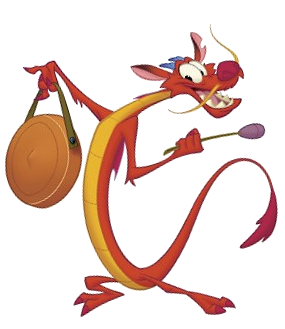
10. Mushu, Mulan
Do I need to explain anything else? Arguably one of Disney's most beloved characters of all time, I'm sure even older Disney fans would love to watch a film featuring this guy's humor and personality. Rather than starting at the beginning and explaining childhood, it would be great to see Mushu readjust to life after helping the Girl who saved China.
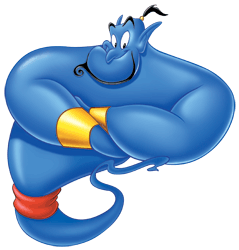

9. Genie, Aladdin
For a character so attuned to the desires and intracacies of human interaction, the audience knows nothing about Genie and his past. Being cooped up in a lamp for a couple of centuries is bound to produce at least one good story.
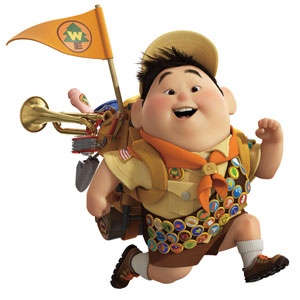


8. Russell, UP

Usually I dislike sequels, but this may prove to be an exception. Lets look at Russell as an adult, has he maintained the love of adventure and life that he achieved with Carl? Or has he succumbed to the bitter and cynical nature of adulthood? Imagining a situation in which he is unexpectedly brought back to the house, maybe Carl left Russell the house in his will and passes away, seems to be the expected direction of a follow-up film.


7.  Pinocchio

I see a live-action version of this film taking one of two routes: either a comedy that emphasizes the the idea of "being careful of what you wish for", or a darker Tim Burton-esque film that dramatizes the end of a childhood and the dangers of growing up too fast.


6. Boo, Monsters Inc.

Similar to the idea with Russell, I also think the integral concept of family plays a huge role in the love behind this movie. On the other hand, if they simply wanted to flip the plot upside down, the movie could revolve around the idea of the monsters getting stuck in the human world. Needing to find Boo (who is now an adult), they could go on an adventure through the streets of Ohio to find the only person who can help get them home.


5. Kristoff, Frozen

Why was this poor boy left in the woods with some talking rocks and a reindeer?! How come there are at least one hundred guys cutting ice at the beginning of the film, but there ends up only being one person to sell any in the whole town?! How did he turn out so normal despite being raised by rocks? Does he have magic powers too?! Is that how he talks to his reindeer?! Give me some answers here Disney!! Plus this would be an easy and reliable way to open up the Frozen franchise to a larger demographic of consumers, boys in particular.


4. Esmerelda, The Hunchback of Notre Dame

Very little is explained about Esmerelda in her film. The only thing the audience knows is that she enjoys dancing, her only source  of family is a pet goat, and that she is a Gypsy. What is it about Quasimodo that draws her to help him? After all, he is of the white ethnicity that is consistently killing her people, and by saving him she loses the only source of income she has. She comes across as far too cynical to believe in the "But I love him Daddy!" mindset that Ariel and Pocahontas succumb to.
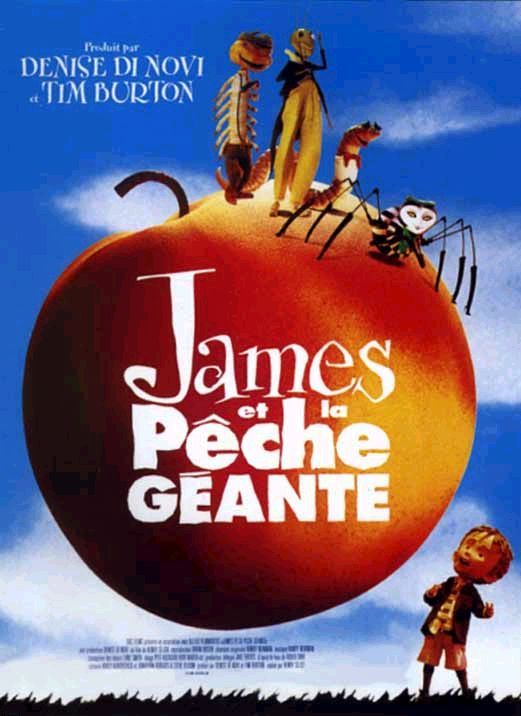


3. James and the Giant Peach

I loved this movie as a child, less because of the plot and story and more because of how incredibly captivating every character was. Every time I watch it, I find something new and extraordinary about the design. If the same amount of detail conscientiousness is put into the costuming, set, and makeup of a live-action version, it would be very very hard to turn down.
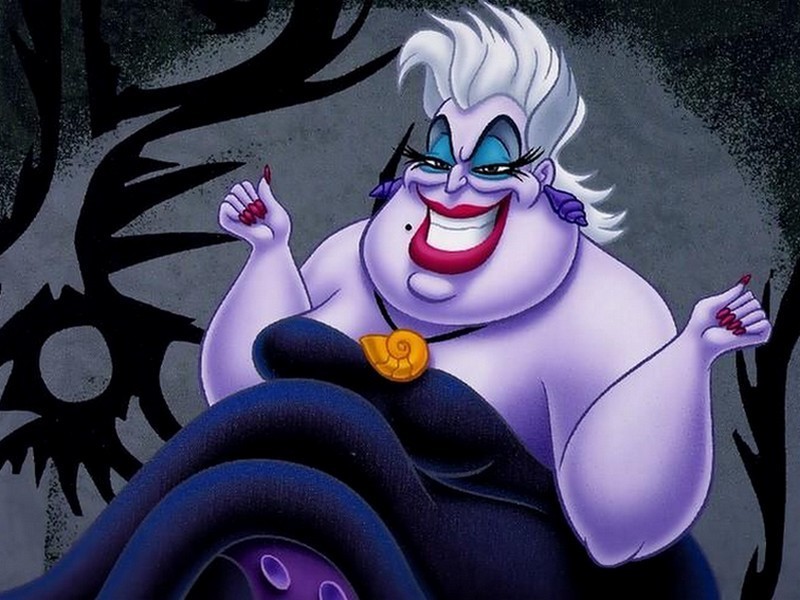


2. Ursula, The Little Mermaid

Her character is seemingly one dimensional, but definitely has enough personality and intrigue to hold a film on her own. Much like Maleficicent, it would be really entertaining to see her interactions with Ariel from her perspective. What is she really after? Why does she have octopus legs instead of a mermaid tail? The underwater setting of the original may prove to be difficult to recreate in a live-action format, but it could make for a visually stunning product with the help of CGI.


1. Megara, Hercules

It may have been a little while since I've watched this movie, but I'm pretty sure that her story is limited to the men in her life who have done her wrong in some way. Whether it was Hades for imprisoning her, or the love she sacrificed her life for, or even Hercules who is seemingly the point of her entire existence. There is something very relatable to the conflict between the spunk and sass of her personality and the hopeless romantic tendencies that get her into trouble. In Mindy-Kaling/ Mean Girls fashion, Disney would have the opportunity to derive a film for older audiences with already well known characters.

Sunday, March 22, 2015

Response to 17 Reasons We Need a South Asian Princess

This is a response to an article from Buzzfeed discussing the reasons why Disney needs to make a film starring a South Asian heroine, and I'm not sure how I feel about it.

The problem isn't that I don't want there to be more racial diversity within the Disney Princess collection or that I dislike the idea of having a South Asian princess. The problem is that I am concerned  about the how easy it would be for writers and producers to turn this project into a well packaged bundle of stereotypes and cliche archetypes.

Pocahontas, Aladdin and the Hunchback of Notre Dame all featured minority female heroines and the majority of the backlash surrounding these characters was that they became defined by their race as opposed to their story and individuality. In my opinion, although they have made significant improvement, Disney has yet to produce a film in which a minority heroine is portrayed in a way that is widely relatable and accessible to many.

 I know you may argue that Tiana from Princess and the Frog was a prime example of a minority female defying stereotypes, but I disagree that it was a successful product. Yes, it was a powerful move by producers to support, and I can appreciate the historical context of the piece. However, the fact that it made very little merchandise sales in comparison with other characters, and how the majority of the demographic purchasing the merchandise is African American households concerns me.

Why is it that millions of little girls can relate to a half-human/half-fish, but not an African American princess?  Girls of all races aspire and look up to Ariel, you can see this in the amount of halloween sales and dress up sales the mermaid is racking in to this day. However, this was not the case for Tiana, as the majority of the girls buying her products are just the girls that physically look like her.

I support the push for a South Asian Princess 100%! What I don't support, is a movie that blends a character's ethnicity with her identity. By taking away the appeal of being an "everyday girl like you and me", we would only isolate her from the brand and contribute to reasons why diversity in the media is struggling.

Our Movie

I have a very special place in my heart for the movie Up. I usually live blog most movie reactions, but   this time I would rather construct this personal response while I watch for the 100th time. 

Everyone meet Brent:


We met my freshman year of high school while I lived in Florida, while he was wearing a pair of glasses in class one day, I told him that he looked like Carl Fredricksen, the main character in Up. According to Instagram, the picture below was taken 149 weeks ago.


After we started talking, we found that we both loved that movie, I loved the storyline and the poignancy of the film, and he liked the talking dogs. Regardless, we both loved the film and would talk about it often. 
Flash forward two years, to our junior year. I let him know that my dad got orders for us to move to Honolulu, Hawaii and that I wouldn't be completing my senior year at our school. We were both sad, but decided to make the most of the time we had left. 
Flash forward a couple of months and after a successful homecoming, he handed me a packet of notecards that said "Clues" on the front with the very explicit instructions of "DO NOT OPEN UNTIL I TELL YOU TO".

Flash forward about three and a half weeks and I receive a very mysterious text to asking if I still knew where these cards were, and if I did, to open and read them.
On the other side of each one was a question about the movie Up, hangman-style with certain letters of the answers circled. Once I was done with all of the clues, the circled letters spelled out "COME TO THE GAZEBO". (There was a park with a Gazebo about five minutes away from my house.)
I walk out to the spot he told me to go to and see this.

Brent bought 80 balloons from the nearest grocery store and an industrial ladder, climbed to the top of the gazebo and tied them to the top to make it look as much like the house from our favorite movie as possible. He handed me a giant bear (thats my head sticking out from behind it) and flowers and asked me to our Junior prom. Of course, I said yes and we had an awesome time. 
Although we go to different schools now, (he is at UCLA), we both still love the movie. And to this day, hundreds of times after watching it, I still cry at the opening scene and he still looks forward to yelling "SQUIRREL!"


The End. 


Sunday, March 8, 2015

Don't Be a Drag, just be Queen


          As far as Putnam’s argument goes, I am conflicted with whether or not I agree with her. On one hand, she makes a great point about how Disney tends to assign more masculine features to their female villains. However, on the other hand, I don’t believe that this was an effort to support certain ideas about transgendered individuals or that the characters were even intended to represent transgendered individuals.
          Disney princesses in particular tend to follow very narrow and limited ideas about beauty. For the most part, they are styled to have very Western features, and arguably Old-Hollywood ideals when it comes to beauty: long hair, big eyes, and lean hourglass figures. By following this standard, Disney is in fact promoting a standard that most applies to specific ideas about sexuality. Putnam supports this idea in her recent article “Mean Ladies: “Transgendered Villains in Disney Films” “In making each heroine’s outfit form-fitting, especially around her breasts, waists, and hips, Disney accentuates the ideal heterosexual female figure to viewers: curvy breasts and hips, an unrealistically small waist- and tight apparel to show it off”. To further this position, Putnam illustrates how this applies to the male characters in these installments as well with “Taller than each respective princess, broad-shouldered, square-jawed, and muscular, their attributes become standardized heterosexual male physical characteristics”.  This is a point that hadn’t before registered in my mind when I consumed Disney media. The male counterparts of the Disney characters never wear pink, speak about maintaining their appearance, or display any overtly artistic appreciation, (i.e. speaking about a love of dance or song, having a job in the arts). 
The characters that don’t fit into this constricted scope of appearance and personality are either the sidekick characters intended to provide comic relief (ex., a weak Mushu in Mulan, or an emotionally sensitive Flounder in the Little Mermaid) or they are the villains that are out to harm Disney’s beloved protagonists. Putnam makes a point in stating that when these ideas about gender normativity are enforced consistently, society can reflect by therefore being less accepting of individuals who don’t fit into this constricted scope of “normality”. This is where my opinion with Putnam becomes one that is less clear in terms of agreement and disagreement. In an attempt to further her argument, she ends up giving credibility to the opposing views that she’s trying to discredit, “While there are no Disney characters that actively announce their homosexuality or transgenderism, there is considerable evidence that Disney’s gender-bending characters are flourishing,” in this sentence alone, Putnam commits the crime that she’s denouncing. She’s assuming that all characters that display unconventional characteristics are transgendered, which seems a lot like the stereotyping to me. None of the characters that were used as examples in her piece were noted as transgendered. While I agree that the way in which Disney villains are characterized presents a problem in how people are perceived by society, I don’t believe that Disney bears the burden of these implications. If she were to expand her argument to pick a bone with media as a whole rather than Disney alone, I would have an easier time agreeing more wholeheartedly.

Breaking heterosexual norms in Pride Rock

Interestingly enough, although I didn’t entirely agree with this piece, it was one of the first articles that I’ve read in which I felt truly entertained and involved. Once again, while there was several moments throughout her argument that made me question her logic, I loved her writing style because I felt like an active and engaged consumer of the text. Especially in the world of academic writing, it is common for me to feel disconnected to not only the text of the article, but the author as well because the material comes across as a lecture rather than a conversation. There is usually no room for me to formulate my opinions about the subject while reading because the author is so busy shoving their ideas into every open nook and cranny of my mind available. It was easier to agree with her because she pointed out the ridiculousness of the extreme beliefs and separated herself from it. Basically by starting her argument by criticizing the views her audience would disagree with the most, she essentially misdirected the negative attention away from her own opinions. If I were to summarize the way I perceived her tone it would be along the lines of “Look guys, these idiots over here think Disney is promoting a gay agenda, and I agree with you THEY are the crazy ones. But for the record Timon and Pumbaa are definitely gay. ”

Points I disagreed with:
1.     being isolated from society or an outcast is not a prerequisite for homosexuality.
2.     The two contradicting morals of the story was a point I definitely hadn’t thought about before, but I thought the whole point of the movie was about finding a balance between the two and being able to find joy in your responsibilities like Mufasa.
3.     A consistent theme throughout her argument equated musical theatre and artistic expression to being gay. Another flawed generalization.

Points I agreed with:

1.     Although wearing a grass skirt has no indication of weakness in Polynesian culture, wearing a hibiscus flower over your left ear means you’re in a relationship. I’m assuming the author is aware of this because she included the detail of the flower placement in her description.  If you were to wear it over your right ear it would mean you’re single.
2.     The discussion the two had over whether or not they were going to raise Simba did not strike me as a loving couple taking in a foster child but rather a scheming pair of friends.
Timon is portrayed in an usually feminine manner for a Disney character, there definitely are moments in which he illustrates a fondness for actions typically attributed to women.

Sunday, March 1, 2015

31 Times Tumblr Questions

An article on Buzzfeed titled "31 Times Tumblr Had Serious Questions about Disney" caught my attention so I decided to comment on the first 20! 

1. The lyrics of the first song is in either Zulu or Swahili, but I am not entirely sure if this post is correct. From my understanding, it means "Here comes a king, a great king." Rather than, "Here comes a lion."
2. This is very very accurate! Interestingly enough though, in a some Nickelodeon cartoons and films, lime green is often used for the good characters. 
3. I'm pretty sure Disney does this on purpose. Although times are definitely changing the connotations of words in our language, "fool" is one that maintains the sting of an insult without being silly.
4. There are a number of places internationally that use VHS tapes still, it's definitely something that has pretty clearly been phased out though in Western countries. 
5. I find the advancement of animation to be one of the most interesting parts of Disney productions. The amount of work that goes into creating the features we take for granted is astounding
6. This fact ruined one of my favorite Disney movies for me. 
7. I've always wondered why gloves were a part of the original cartoon characters. When I was a child it bothered me that real rats and ducks and other animals don't have five fingers or hands, but somehow they fit into a glove.
8. I think this is just a coincidence. There are many characters in the past that have worn gloves without being evil. Take the Candlestick in Beauty and the Beast for example, he's one of the kindest characters in the whole film. 
9. I'm getting the idea that a lot of Disney films would be less enjoyable if they were accurate. 
10. I love this so much. Until I realize the fish is going to die and be consumed for dinner. 
11. This fact actually gave me real chills. Interesting way to pay attention to detail by Disney's part.
12. I wish there was a tumblr or blog dedicated to putting Disney lines into colloquial and unapologetic terms. 
13. It bothers me that this is one of the only films to feature the original language. Mulan and Aladdin both could have used a portion in the film in which this occurs.
14. When I first encountered this fact I was amazed, completely floored. Not once did this logical thought enter my mind as a child. In fact, I can't remember what I made that situation out to be.
15. I once read an article about hoe Peter Pan was promoting a homosexual agenda for kids. It seemed incredibly exaggerated though. 
16. Sometimes I feel bad that history can be oversimplified in such a way. But then I remember slavery. 
17. I've never actually watched Tangled, but I am getting the vibe that the humor is very modern and "New Girl".
18. This is a point I was discussing with a friend the other day, why is it that Disney Princesses are always fueled by sadness to take action? Why is it they are never inspired from anger or any other emotion?
19. "I've been searching my whole life to find my own place," Just noticed that Hans never actually sings about finding love like Anna.
20. Why do people find Hula skirts and Leis so funny? And there are definitely men in the culture that wear them too. Especially after experiencing the culture firsthand, it is a sign of warrior attitude and strength, not silliness. 


Sunday, February 22, 2015

Dopey's Legacy

Short short short summary of the article:

1. Disney unfairly depicts mental illness through the physical illustration of their characters
2. Disney promotes biased and hurtful stereotypes of the mentally disabled.
3. Because of Disney, mentally disabled individuals are going to be treated in an inhumane way.

Rather than going on a rant about how I disagree with this article, I would like to just point out the few problems I have with the argument/the logic of the piece.

1. I don't think that one can legitimately use the depiction of physical traits as a way to support a argument about consistent character portrayal, mainly because it is rare that Disney films aim for their figures to be realistically accurate. Usually the advantage of a memorable and visually aesthetic picture is more important to producers than one that is true to what you see in real life. Therefore, it would make the most sense to take these images with a grain of salt when looking at them critically because it is not only the silly characters that are physical hyperboles, but the entire animated cast. Princesses have nightmarishly small waists and large eyes, the proportion of size from the arms/shoulders to the head of most Princes would make them terrifying in real life. However, the entire point of this construct is that it looks appealing to the audience's eye.

2. The examples that are used in this piece, primarily Gus Gus and Dopey, are both definitely portrayed as less intelligent than their peers but to label them as "mentally disabled" from this trait seems like an exaggeration. One could argue that they are supposed to be illustrated as the younger and/or less mature individuals of their crowd. I know that when I first watched Cinderella, I significantly identified with Gus Gus much more than Cinderella herself. Just like Gus Gus, I had an older brother who often kept me out of trouble and sometimes got me into it as well. I didn't always understand what was going on, but when I did, I was passionate about being a part of whatever the situation was. The greater issue here is the author's definition of mental disability and how wide of a range it covers, as well as the fact that the interpretation of a cartoon character is incredibly subjective to each audience it is shown to.

3. As with every criticism that we deal with regarding Disney, there is the idea that watching Dopey, Gus Gus and Lafou get pushed around by their fellow characters, the audience will be overwhelmed by the urge to do the same to those around them. I don't agree with this specific connection of Disney and their real life counterparts because there are several instances in other genres in which archetypes are portrayed a certain way.